Deal Page is a secure, analytics-driven content platform that helps real estate developers create, control, and track investor-facing deal materials. It turns deal materials into living, secure, trackable experiences instead of one-off documents.
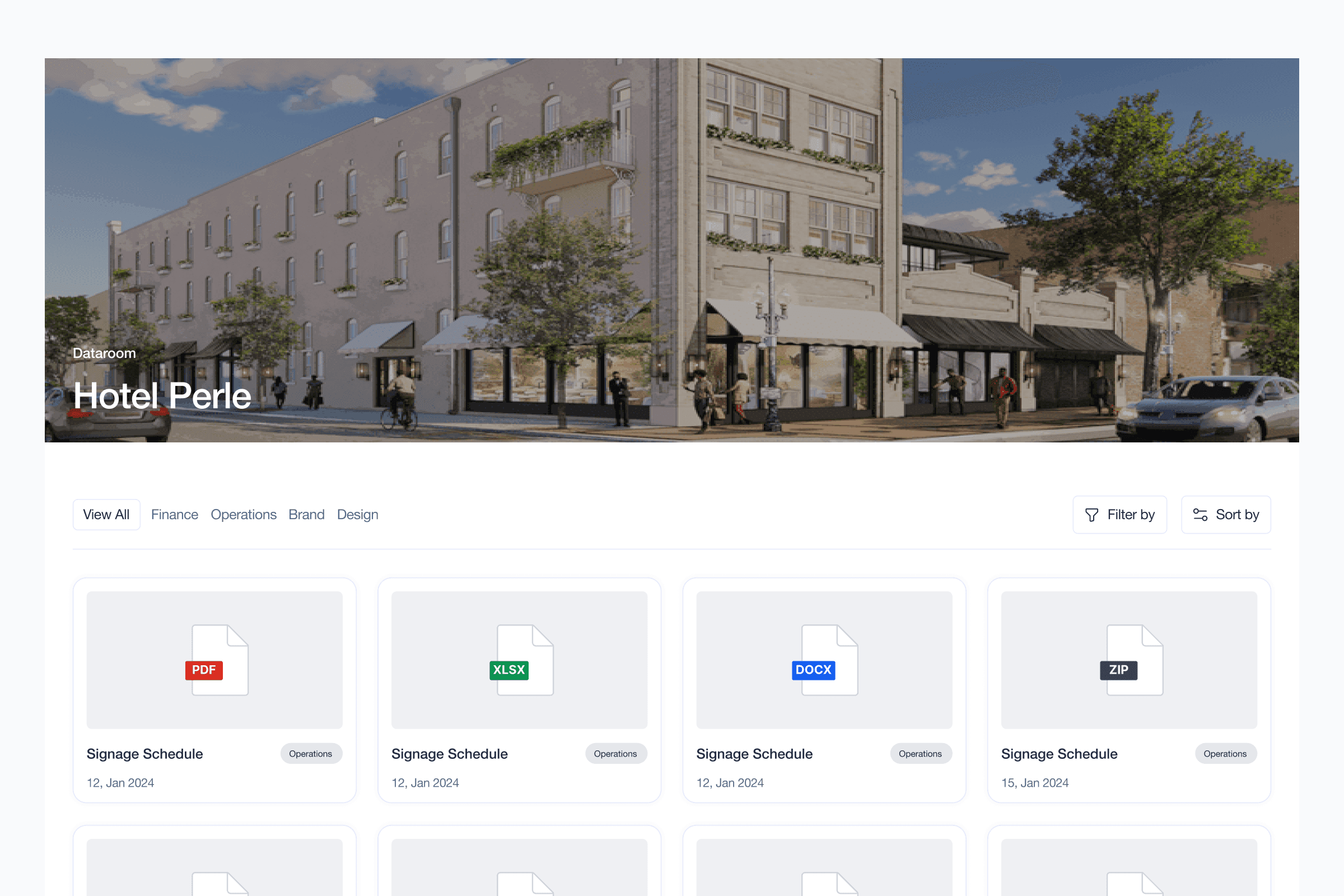
Developers struggled to quickly create polished, investor-ready deal materials. Managing multiple deals, assets, and investor access was slow and error-prone, leading to missed opportunities and frustration.
Our product strategy was focused on simplicity for non-technical users while providing granular control over investor access, file uploads, and updates. Make the process fast, secure, and repeatable.
Design Approach: I worked closely with our client and internal users, testing each iteration quickly and gathering feedback in real time. Every choice I made was guided by their actual workflow and pain points, not assumptions.
Exploring Alternatives: I first experimented with in-page editing for the deal builder, thinking it would feel intuitive. Observing users showed it was confusing. We changed to a side-panel layout, which let users focus on one section at a time.
Key Design Decisions: I used side-panels, live previews, and a muted color palette to reduce cognitive load while keeping the interface clean and functional.
Creating a deal.
Product design, 2025
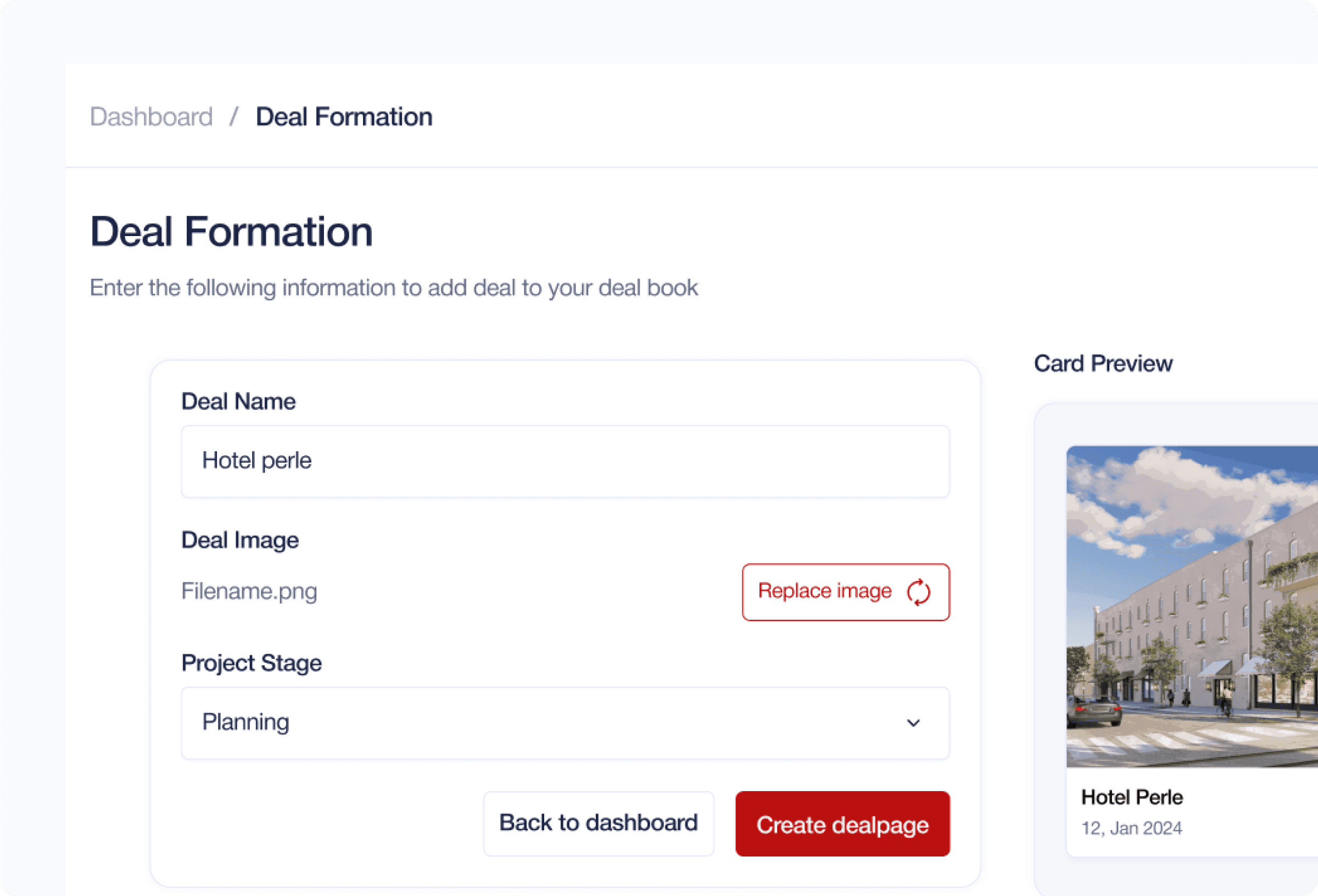
Every deal starts with basic information: a name, where it is in the process, and the files that explain it.
This step creates a single place to store everything related to one opportunity, so nothing lives in scattered folders, emails, or links.
Building the deal page.
Product design, 2025
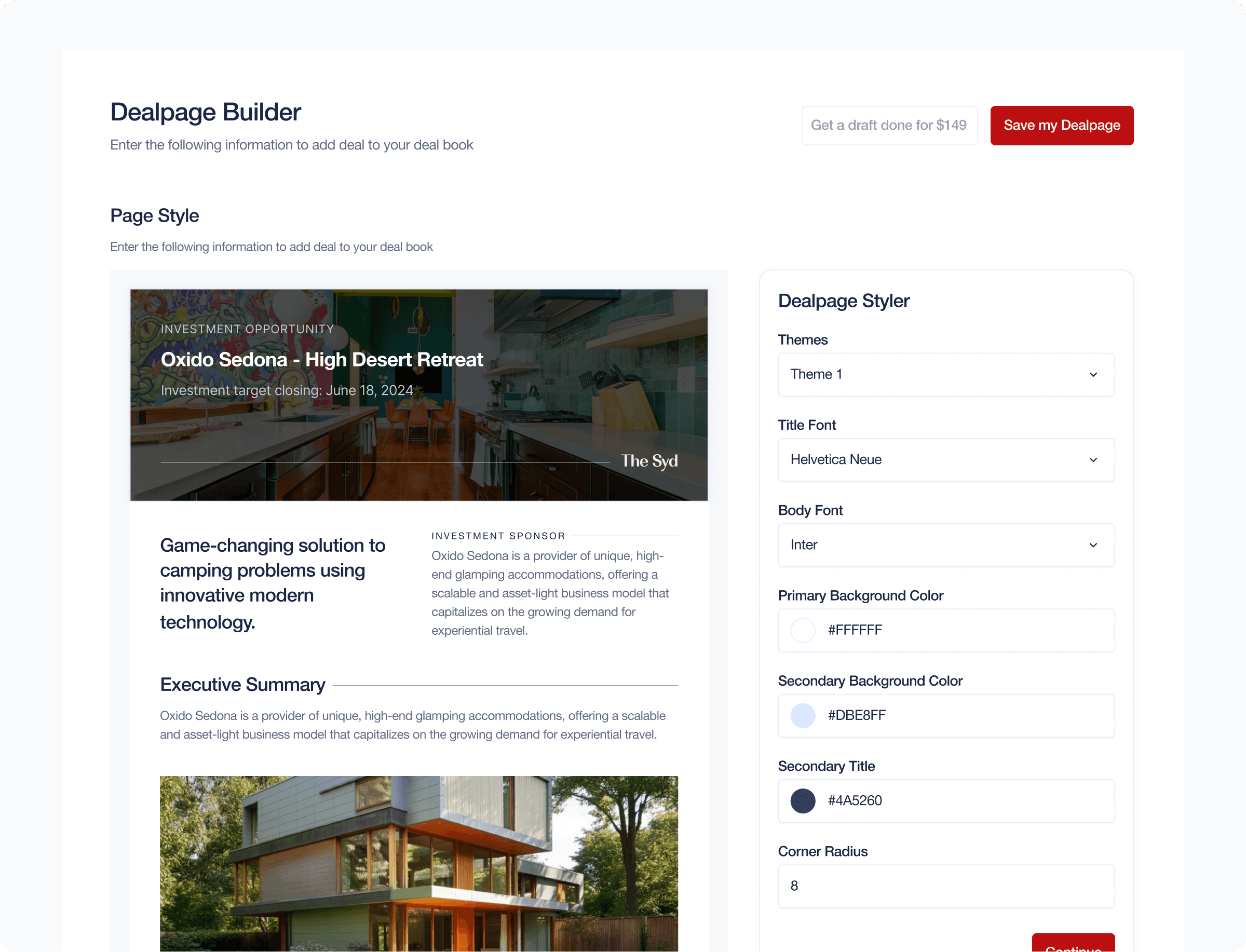
Once a deal exists, developers turn it into a page they can share with investors.
Instead of designing freely, they fill in structured sections, like an introduction, sponsor details, or financial highlights. When a section is selected, a side panel opens to edit its content, while the page preview updates instantly.
This keeps the process focused and repeatable. Developers can create multiple deal pages quickly without redesigning layouts or worrying about consistency.
Deciding who can view it.
Product design, 2025
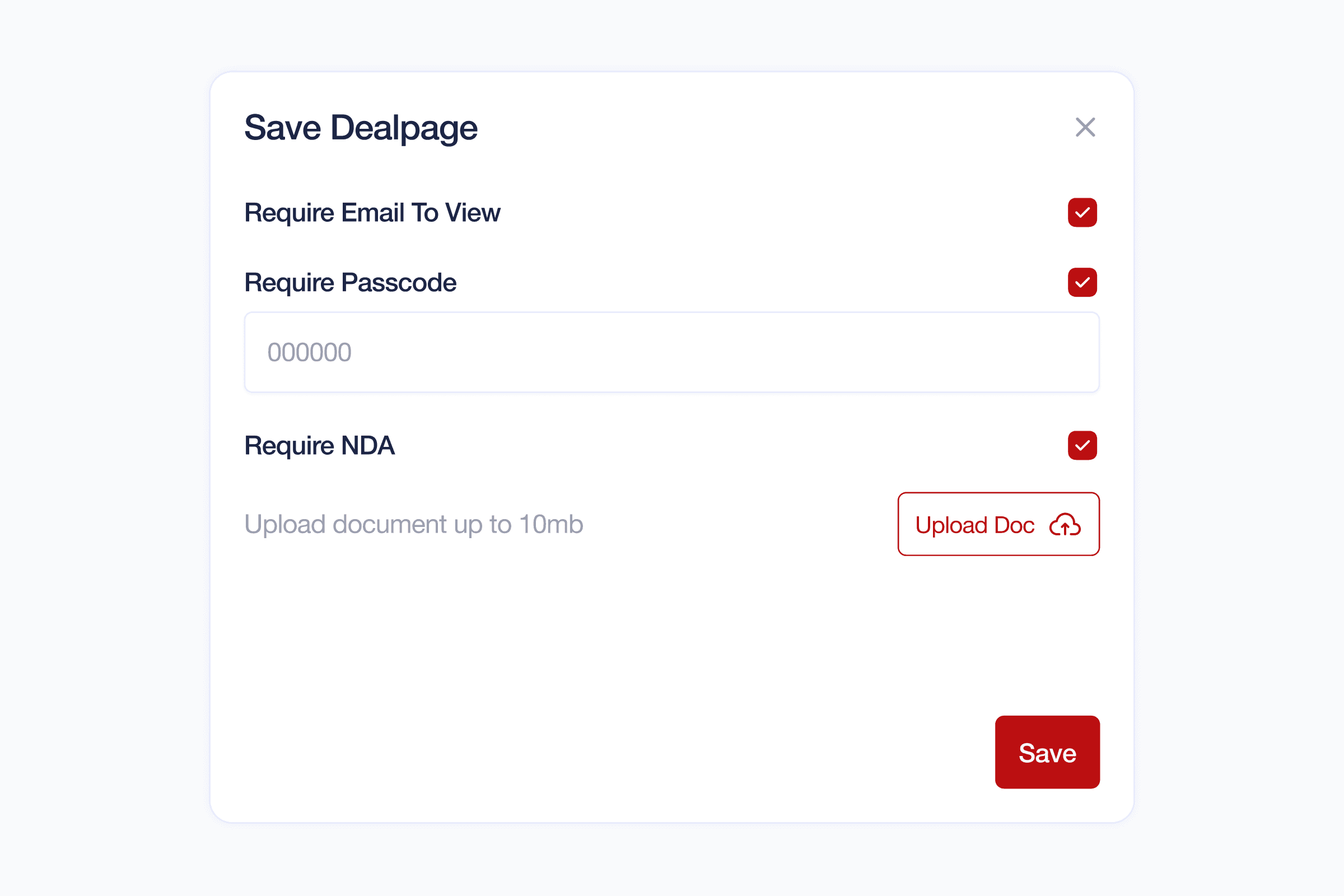
Before sharing the page, developers choose how access should work. Some pages are public. Others require an email, a password, or a signed NDA.
This makes sure sensitive information is only seen by the right people, before the page ever leaves the platform.
Seeing what happens after sharing.
Product design, 2025
After a deal page is shared, developers can see how it’s being viewed.
They can track how many people opened it, when they visited, and whether they came back. As the deal progresses, updates can be posted directly to the same page instead of sending new files.
This helps teams know when there’s real interest and makes follow-ups more relevant and timely.
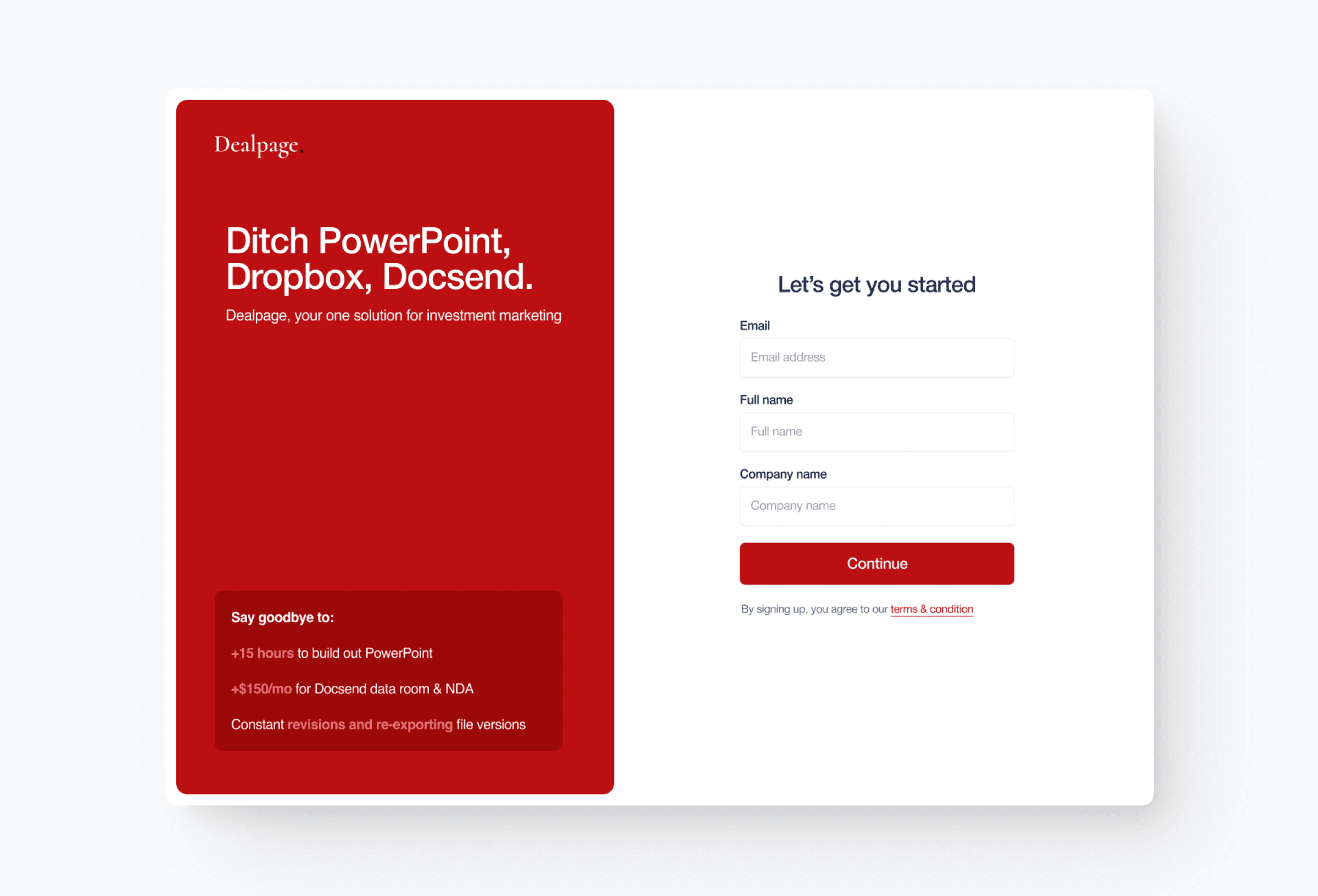
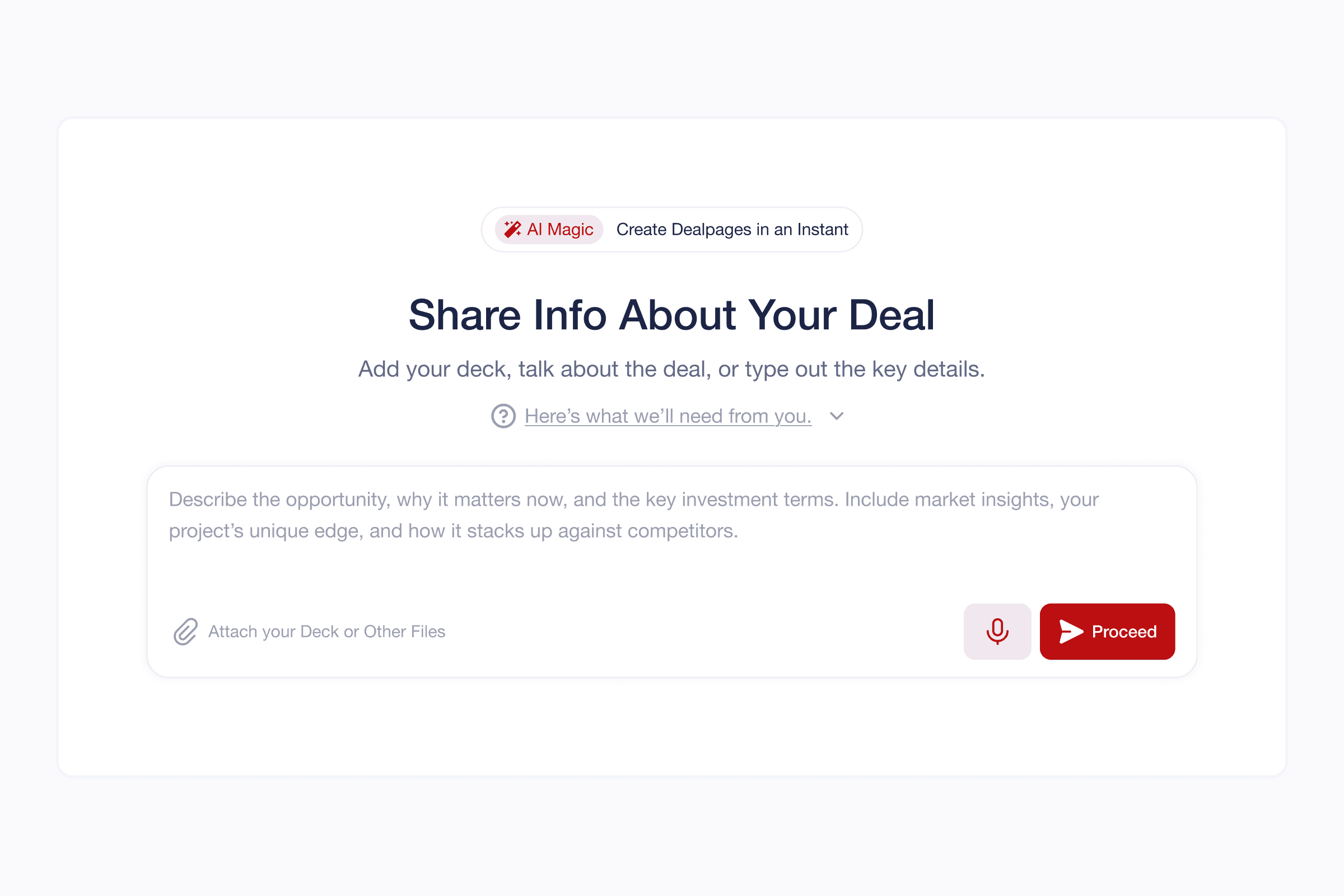
AI Assisted Creation
To speed up deal creation, the product can generate a first draft of a deal page from voice input and uploaded assets.This reduces setup time while keeping the final structure consistent.
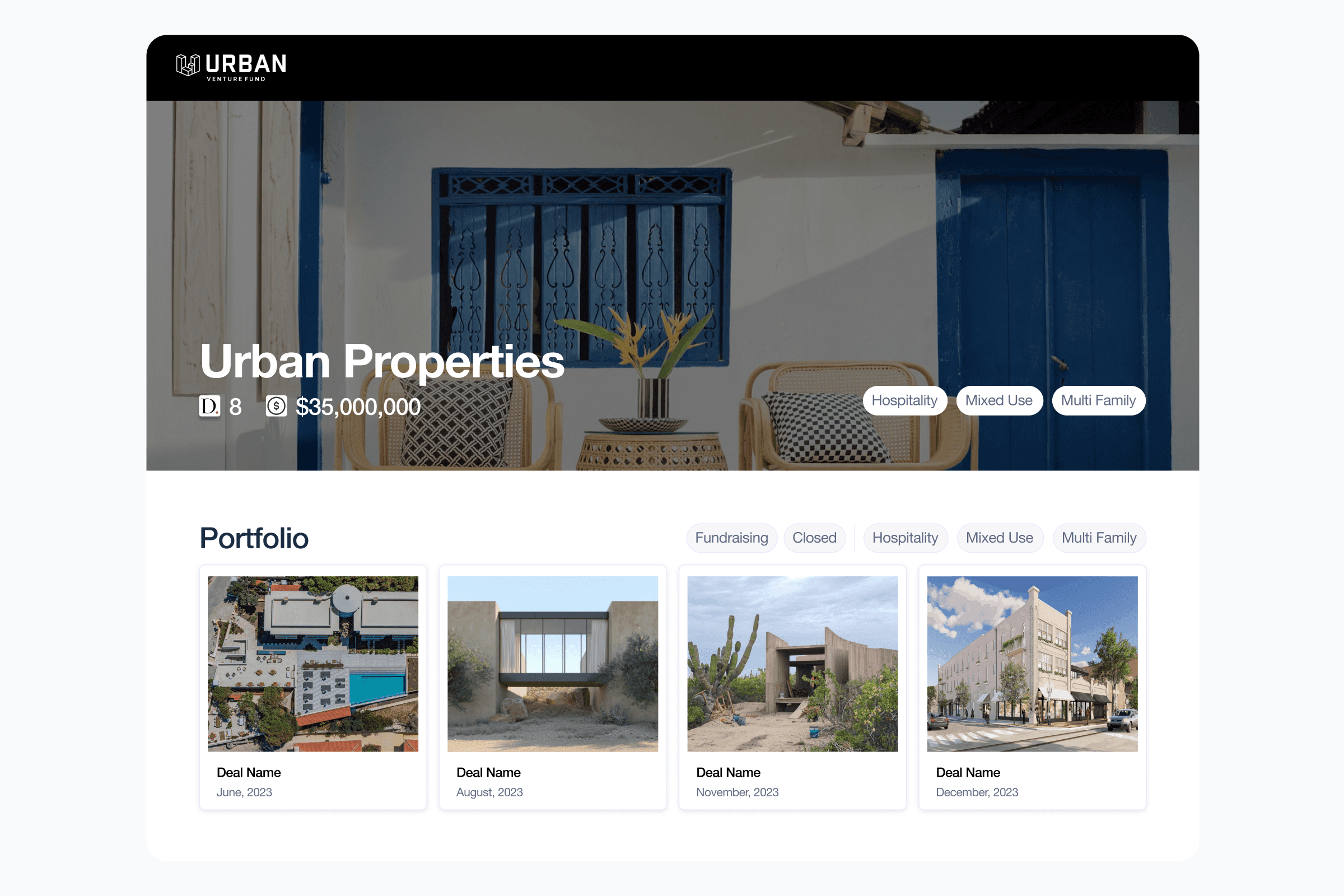
Portfolios
For developers managing multiple deals, portfolios group related deal pages into a single view.Instead of sharing links one by one, they can present an overview of all active opportunities in one place.









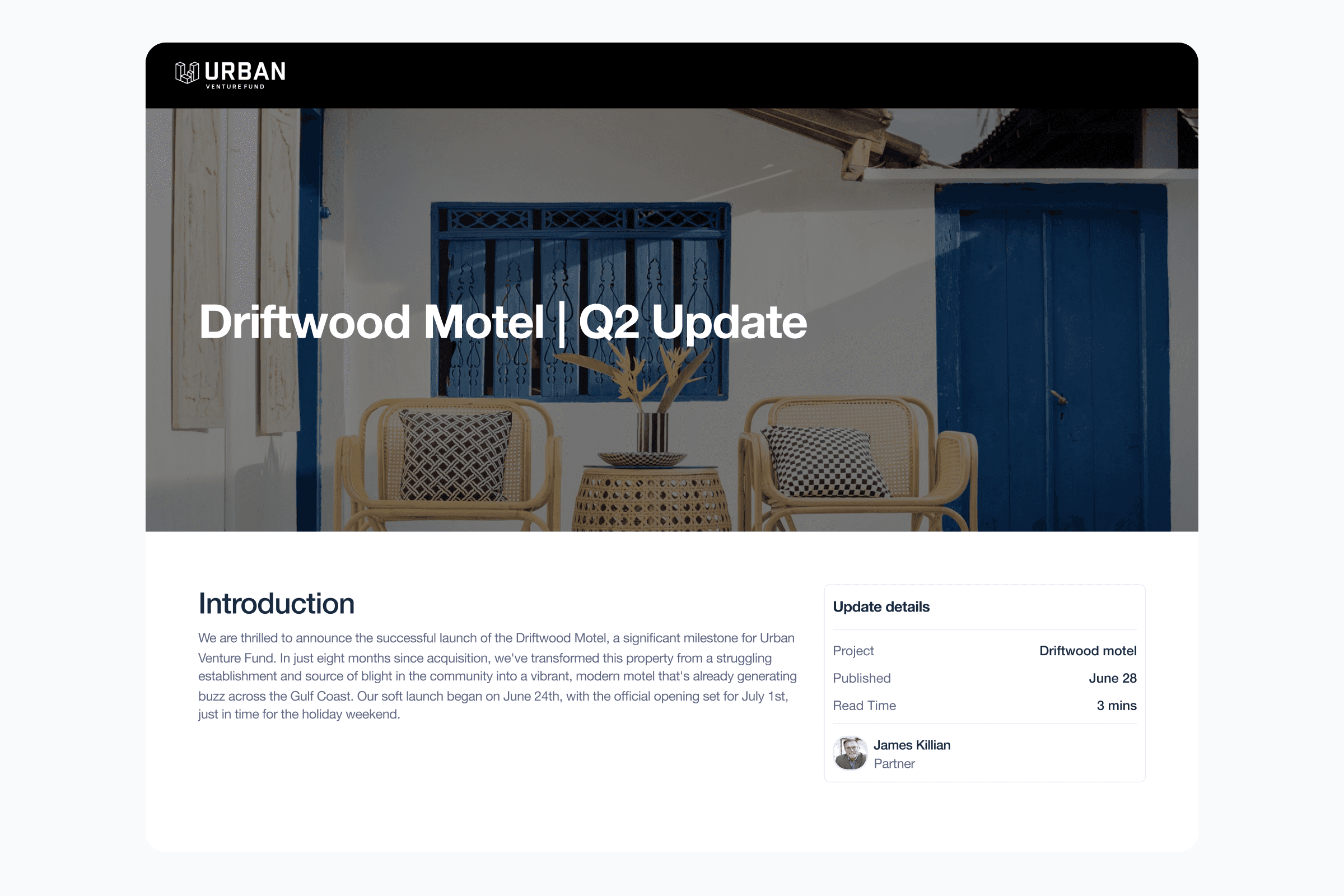
Updates
As a deal progresses, developers can post updates directly to the deal page.Investors always see the latest information without new emails or duplicate files.