FarmAI is a soil intelligence platform for commercial farmers in the US. Given a field, it pulls soil composition, climate history, and agronomic data to recommend what's worth planting and why.
I looked at three markets with one filter: where does the data infrastructure already exist, so the product doesn't end up being a data collection tool disguised as a design project?
Sub-Saharan Africa fell off first. Satellite imagery coverage is inconsistent across most of the region, soil records are fragmented and largely offline, and closing those gaps would mean shifting the manual work onto the farmer. That's the opposite of what the product is supposed to do.
Canada was more promising but still not reliable enough. CanSIS exists, but the coverage depth and API consistency aren't where they need to be for an MVP that's supposed to pull data automatically. A lot of it still requires manual cross-referencing to trust at scale.
The US made the most sense. USDA and SSURGO offer structured, queryable soil data across the country, with satellite climate records on top. The foundation was already there.
The user here is a commercial farmer managing real acreage, making planting decisions that directly affect their income. They're not coming to a platform to learn about soil science. They need a clear answer and enough context to trust it.
The soil composition, climate patterns, crop rotation logic: all of that processing needed to happen out of sight.
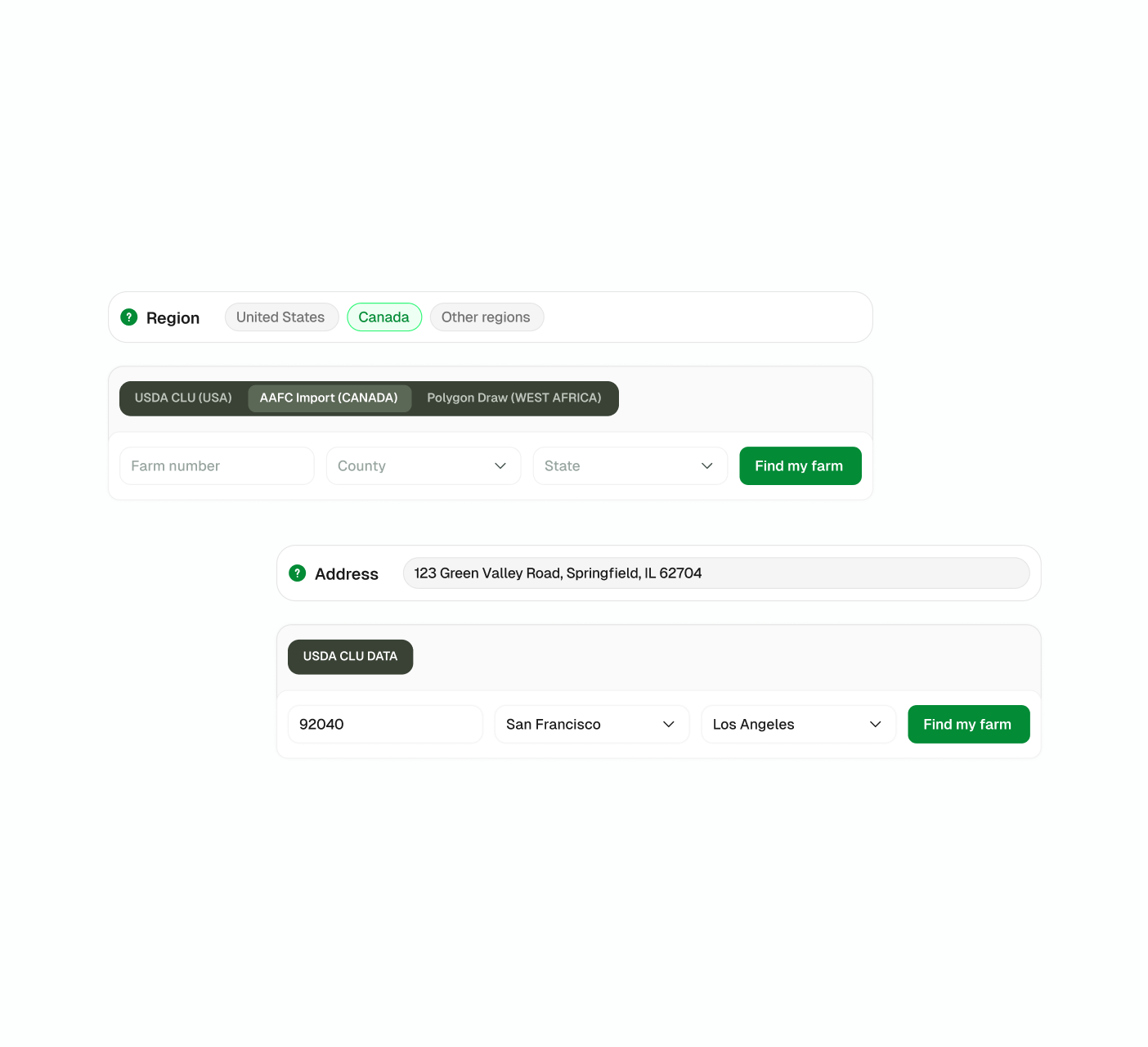
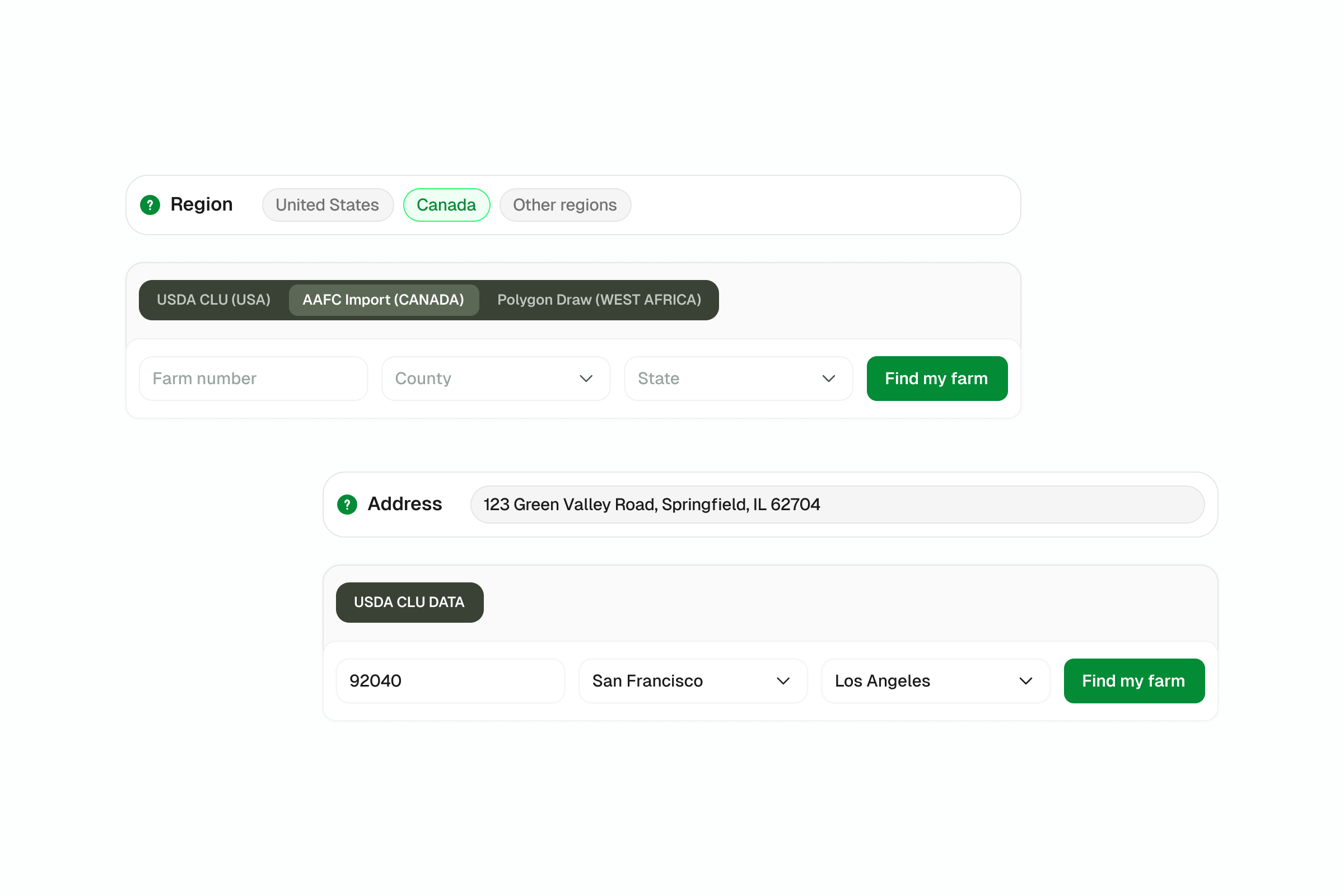
The flow is three steps: create your farm, define your field, get your crop recommendations. Most of the inputs are pulled automatically from USDA and SSURGO with satellite climate data on top, so the farmer isn't manually entering too many data.
An interactive map handles field boundary definition directly, without coordinate entry. Recommendation cards surface the most relevant crops with just enough supporting detail.
A comparison graph lays out what the system factored in and how the top options stack up against each other for factors such as yield, water usage, soil health and projected revenue.


Planting the right crop for a given soil and climate profile reduces failure risk and cuts down on wasted inputs; fertiliser, water, labour.
Over time, that compounds into more sustainable land use and better margins for the farmer. The decisions were always going to get made. FarmAI just means they're made with better information


Manual GPS measurements for field boundaries instead of satellite mapping. Physical soil sensors deployed on-site, feeding local readings directly into the platform. An offline-first architecture that doesn't depend on any centralised data API, because you can't, which is definitely a slower setup to scale, and puts more work on the ground team.
The bigger realisation was that data infrastructure is a design constraint as much as it is an engineering one. When the data is clean and queryable, you design for intelligence. When it isn't, the product has to collect it first, and that's a completely different experience with different UX priorities.
By reducing setup effort, improving visibility into field conditions, and providing transparent crop recommendations, FarmAI helps farmers make more informed planting decisions while reducing risk and uncertainty.