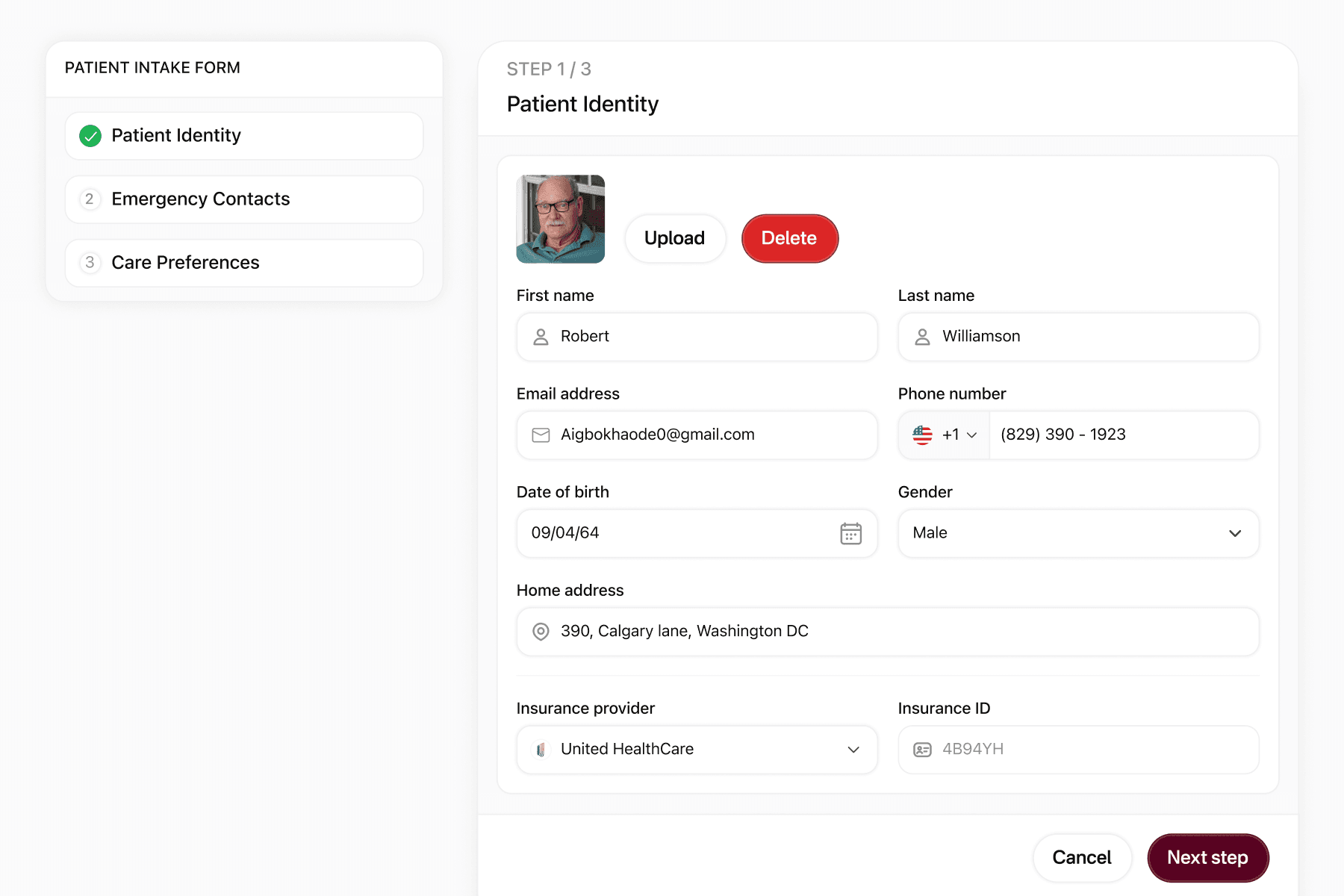
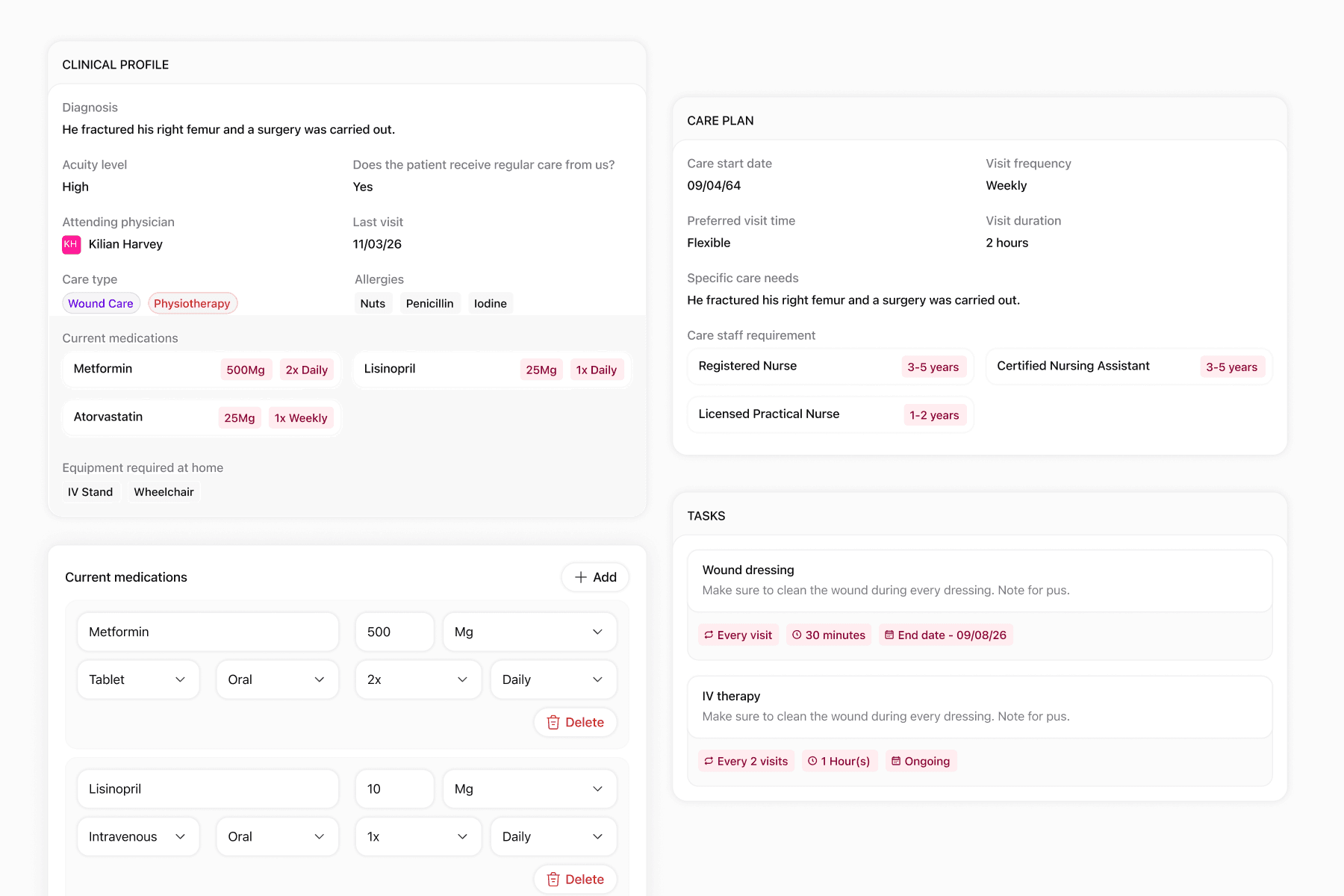
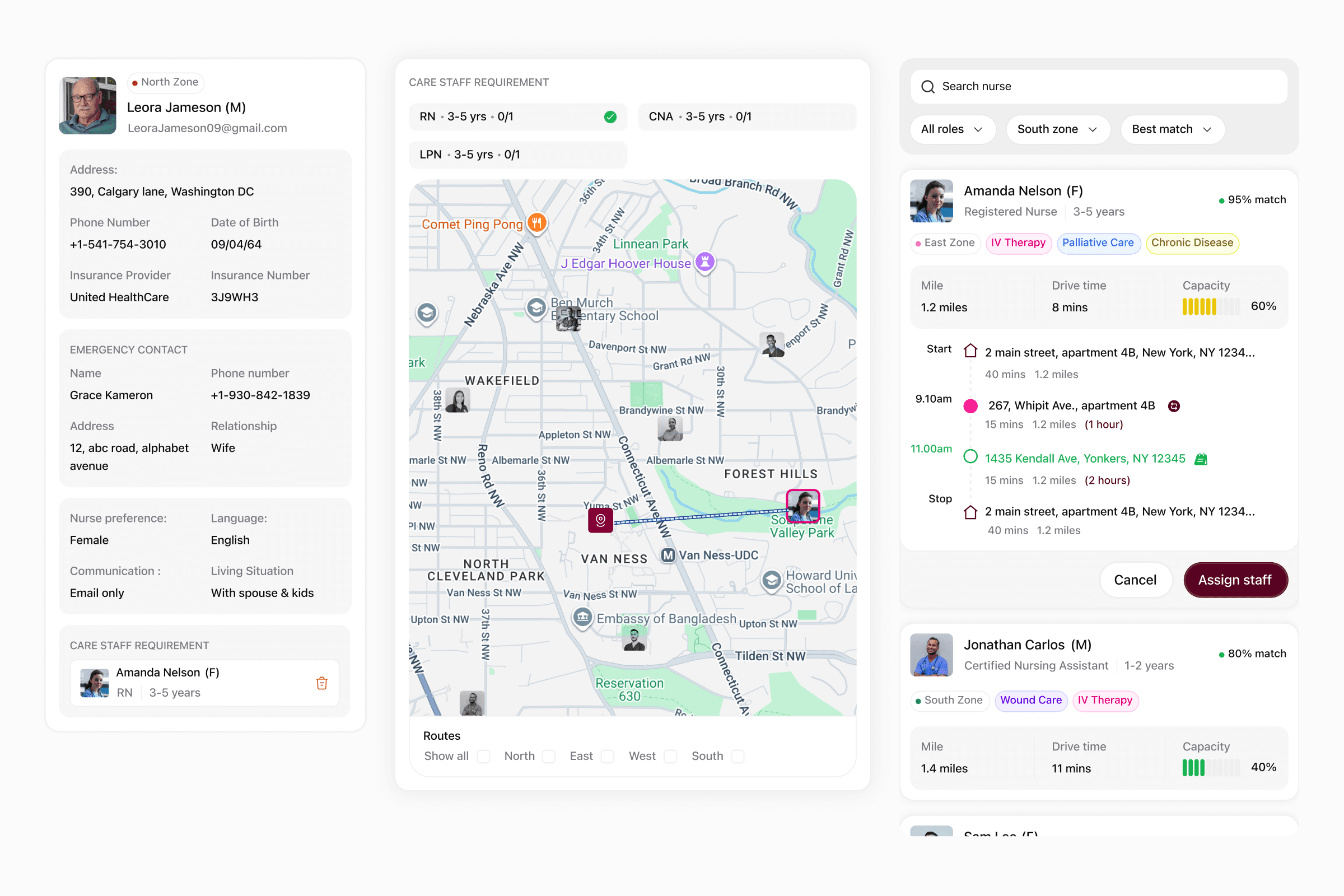
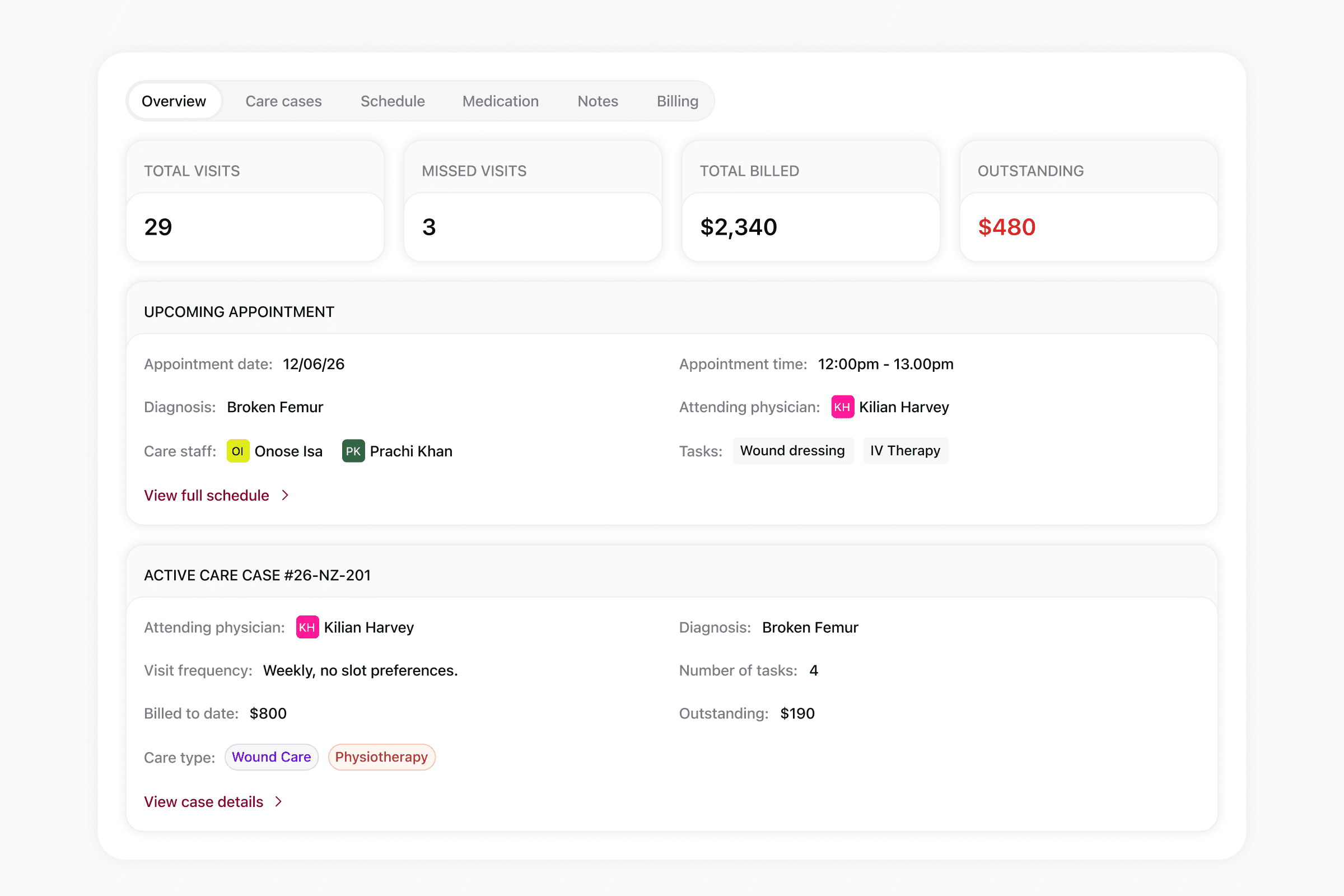
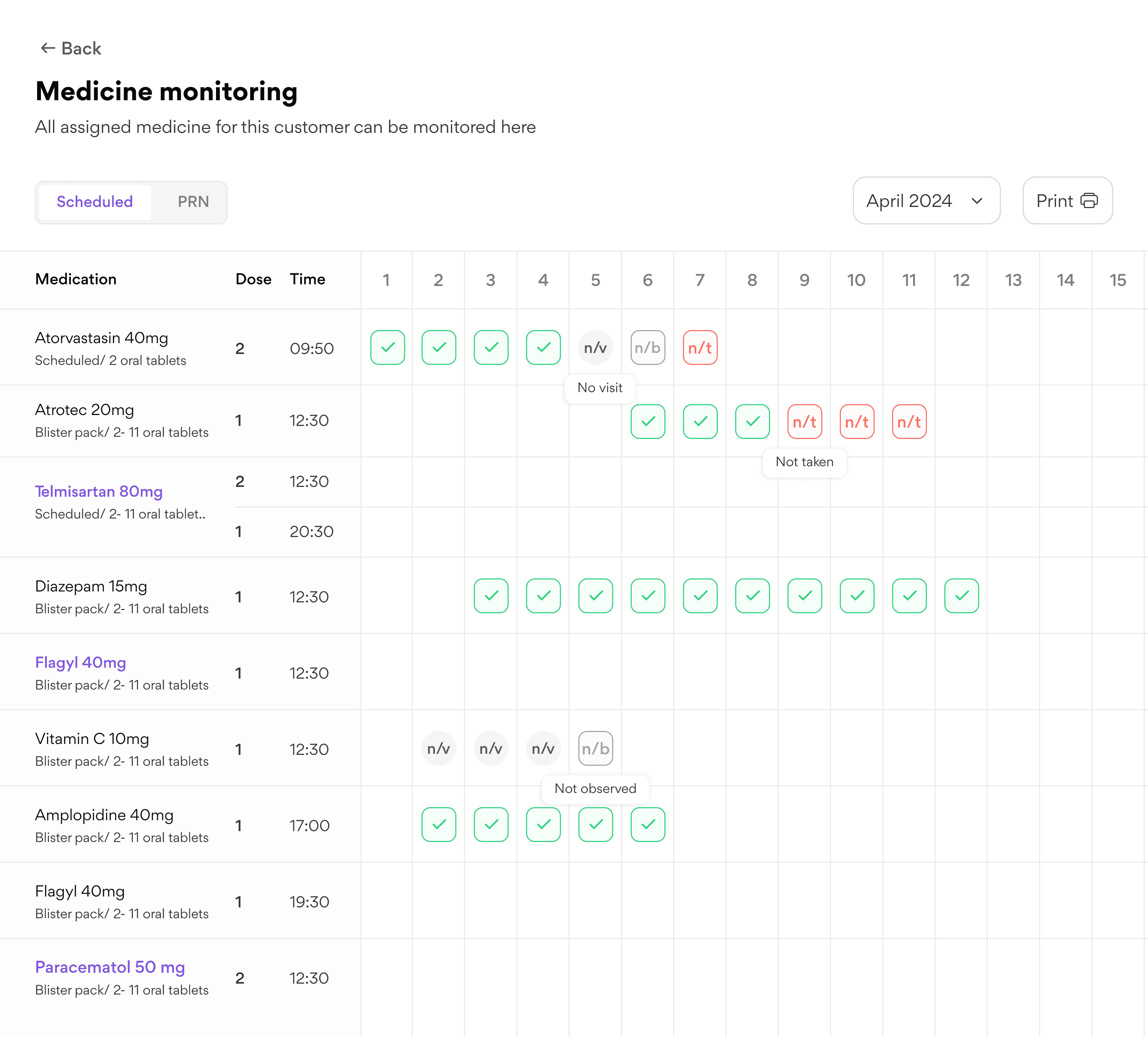
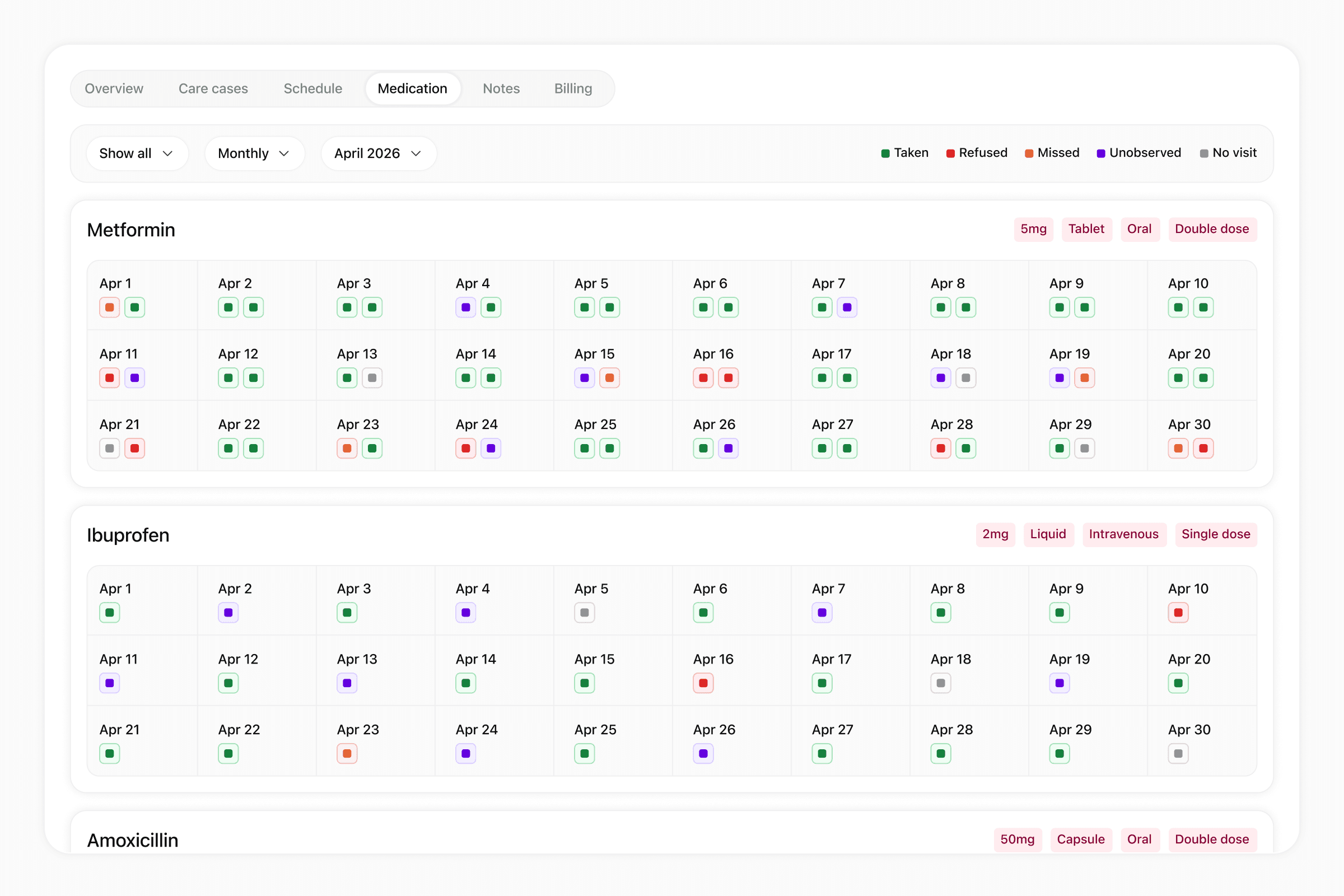
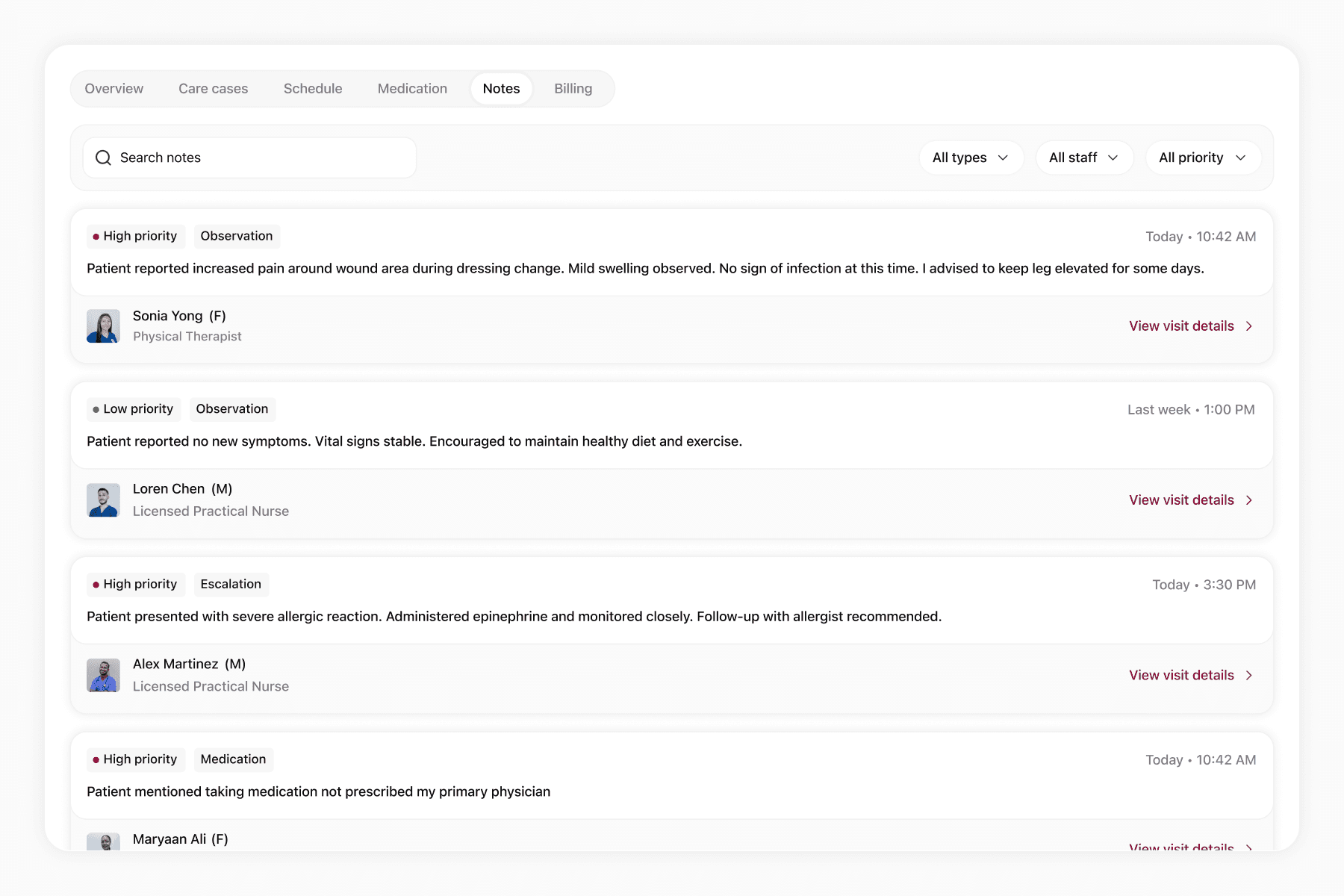
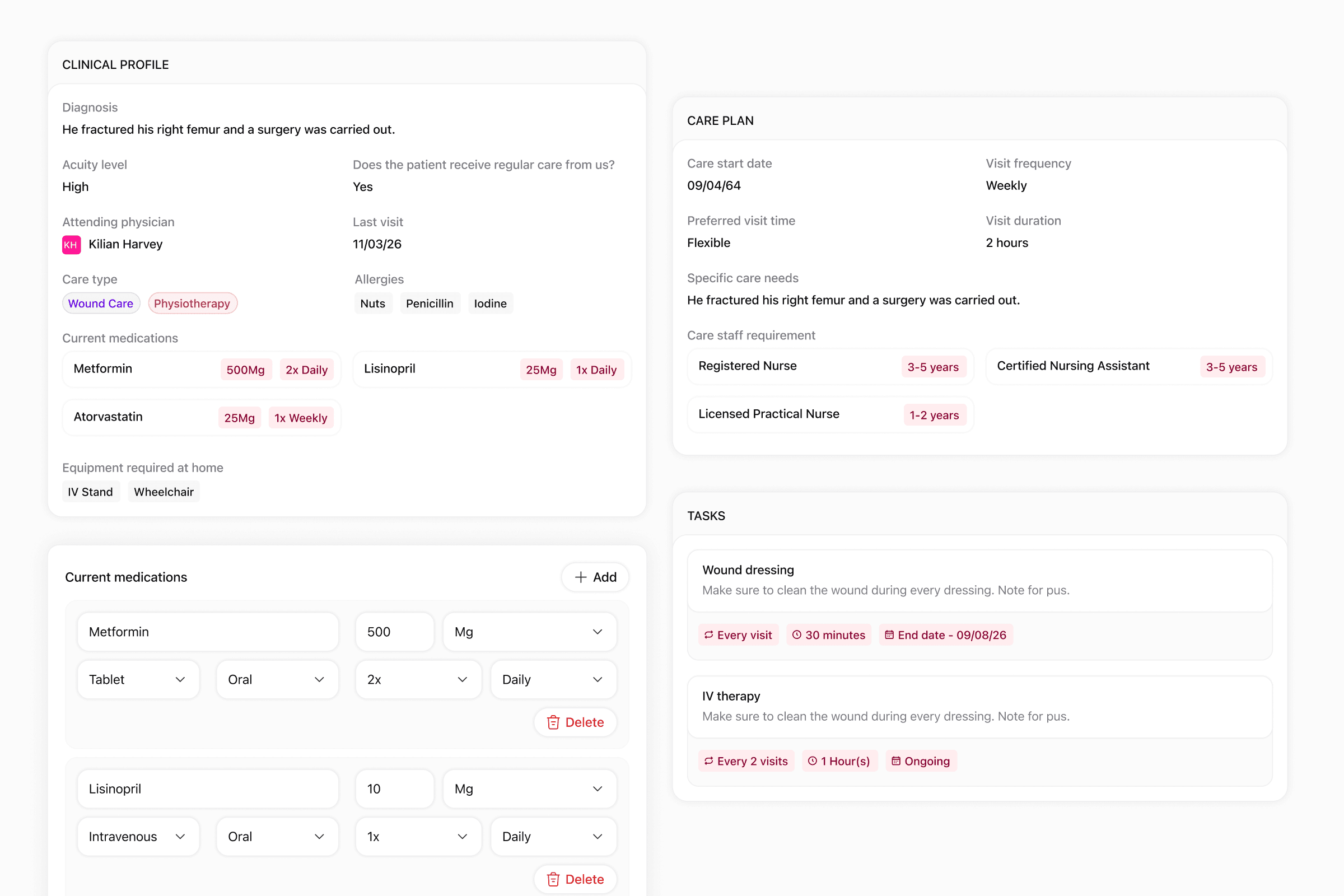
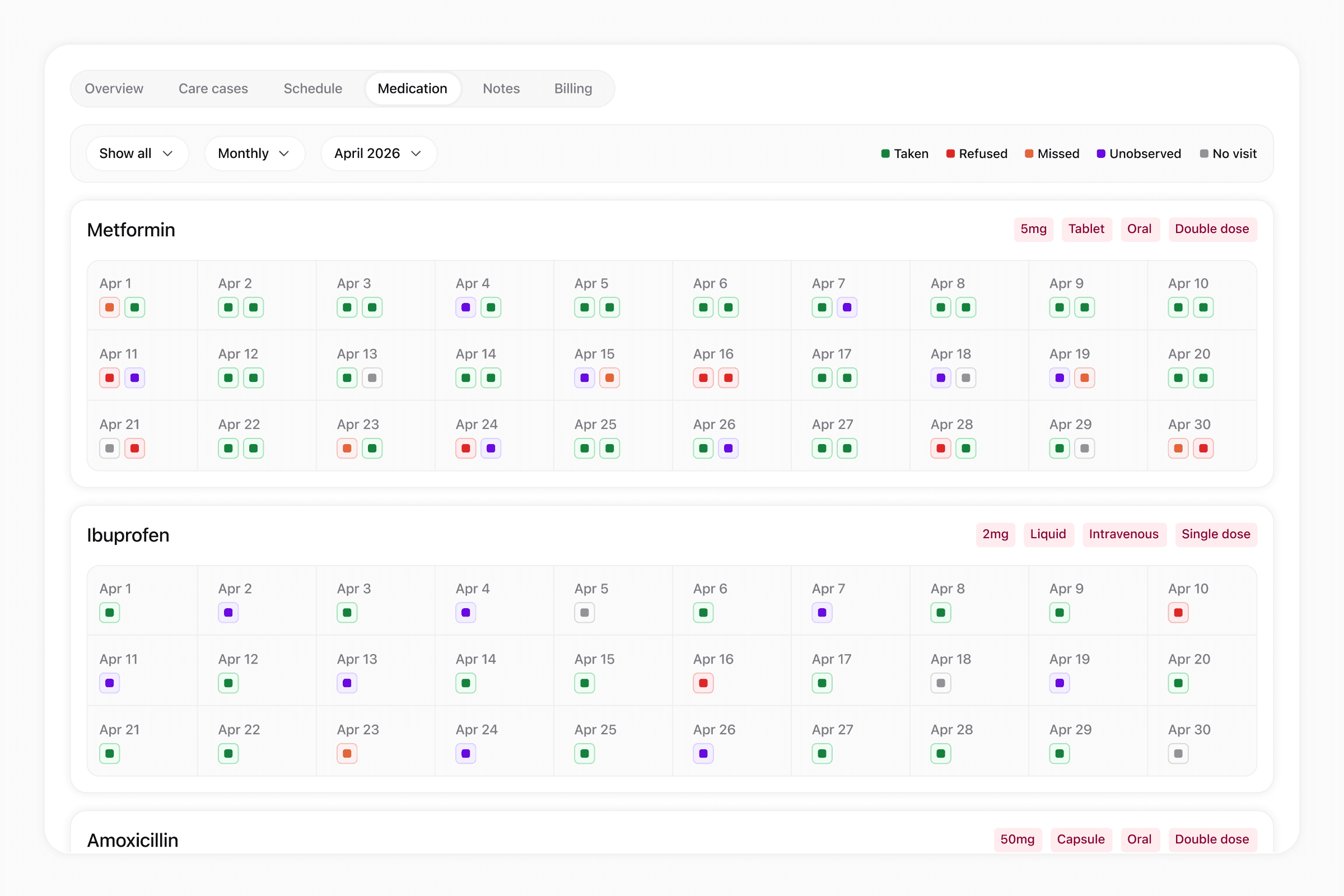
Getting clinical care at home sounds simple. The reality of coordinating it is anything but.
Private home care agencies are managing patients with real medical needs; post-surgical wound care, IV therapy, physiotherapy, chronic disease management, delivered by qualified nurses across a city.
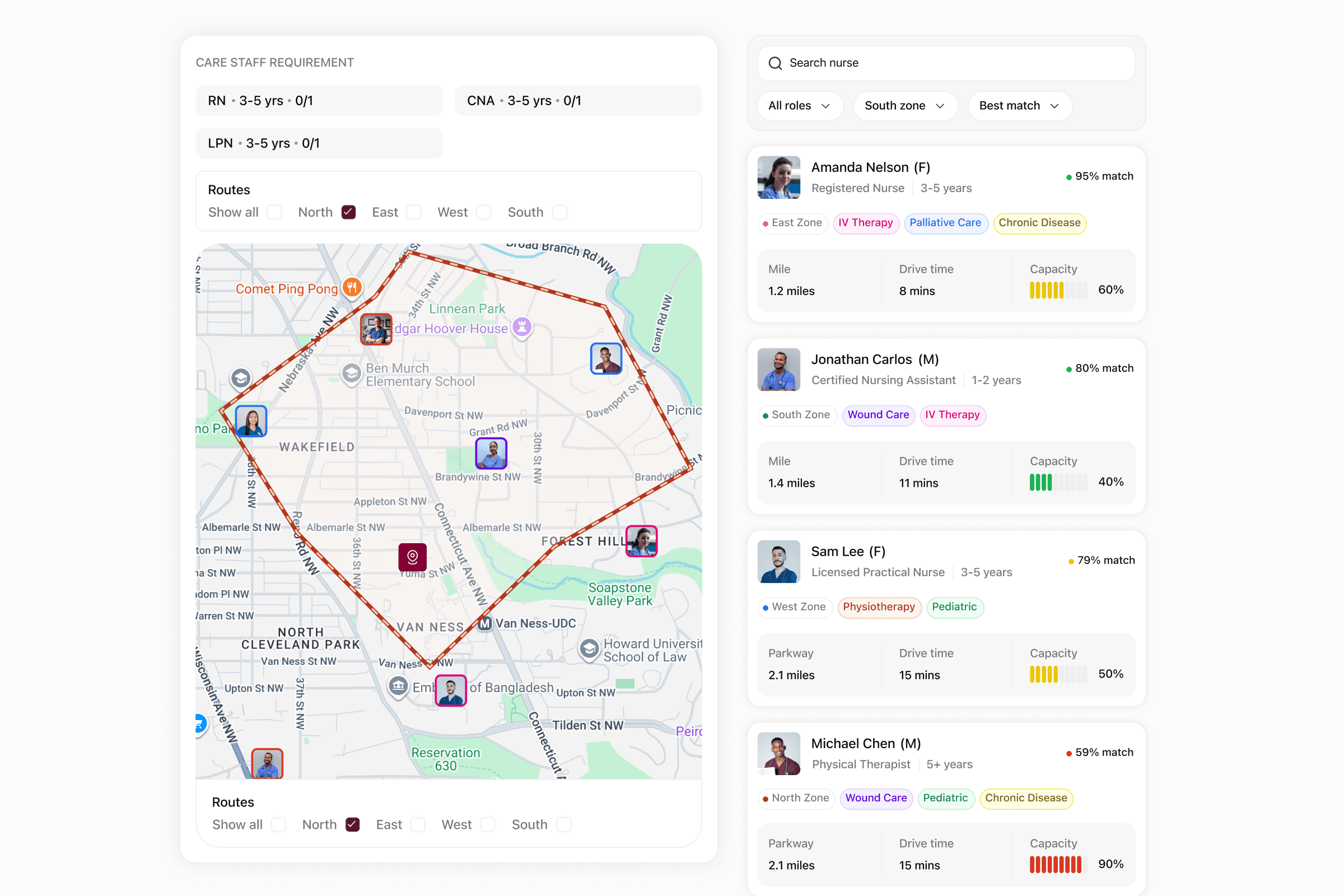
The people running that operation day to day are coordinators. And most of them are doing it on spreadsheets, group texts, and memory.
I deal with migraines. There have been days when I physically could not get myself to a hospital for an injection I needed, not because the care wasn't available, but because getting there wasn't possible.
That experience pointed me toward something real. For people who are elderly, post-surgical, or living with physical disabilities, the gap between needing clinical care and being able to access it isn't a minor inconvenience. It's a structural problem that plays out daily.
The answer isn't just sending nurses to people's homes. It's making the coordination behind that reliable enough to actually function at scale. That's what I set out to design.